Everyone makes mistakes. Sometimes big ones. The kind where a simple "sorry" text feels pathetic, like showing up to a black-tie event in flip-flops. When you've really screwed up -- missed something important, said something hurtful, or just been an idiot when someone needed you most -- you need more than 160 characters to make it right.
Imagine forgetting your sister's birthday. Not just forgetting to call -- forgetting entirely. Say she finds out when she sees you post about some random Tuesday like it was just another day. Your first instinct might be to text "OMG I'm so sorry!" But staring at that message in your drafts, you know it isn't enough. She deserves better than a text that took three seconds to type.
That's the moment to remember something important: when sorry needs to be more than a text, you need an apology that matches the weight of what you're trying to fix.
Why Most Apology Card Ideas Fall Flat
Traditional apology cards have a hard job. You walk into a store, flip through a rack of generic "Sorry" messages written by strangers, and hope one of them captures your specific brand of regret. Most of them say something like "Sorry for my mistake" in boring Times New Roman, maybe with a sad puppy photo.
The problem? Real apologies aren't generic. They're personal, specific, and they show you understand exactly what you did wrong. A store-bought card that could apply to anyone's mistake doesn't prove you put thought into making things right.
How to Apologize With a Card That Actually Means Something
An effective im sorry card needs three things: it needs to be personal, it needs to show effort, and it needs to make them feel like you really get what you did wrong.
Here's what goes into crafting an apology that sticks:
Start With Ownership
Don't say "Sorry if I hurt you" or "Sorry you feel that way." Say "I messed up" and be specific about what you did wrong. Your card should acknowledge the exact impact of your actions, not dance around it.
Make It About Them
The best apologies focus on how your actions affected the other person, not on how bad you feel about it. Instead of "I feel terrible," try "You deserved so much better from me."
Show, Don't Just Tell
This is where most apology cards fail. They tell someone you're sorry, but they don't show any effort beyond walking to the card aisle. A real apology requires investment -- time, thought, creativity.

When Sorry Needs to Be More Than a Text
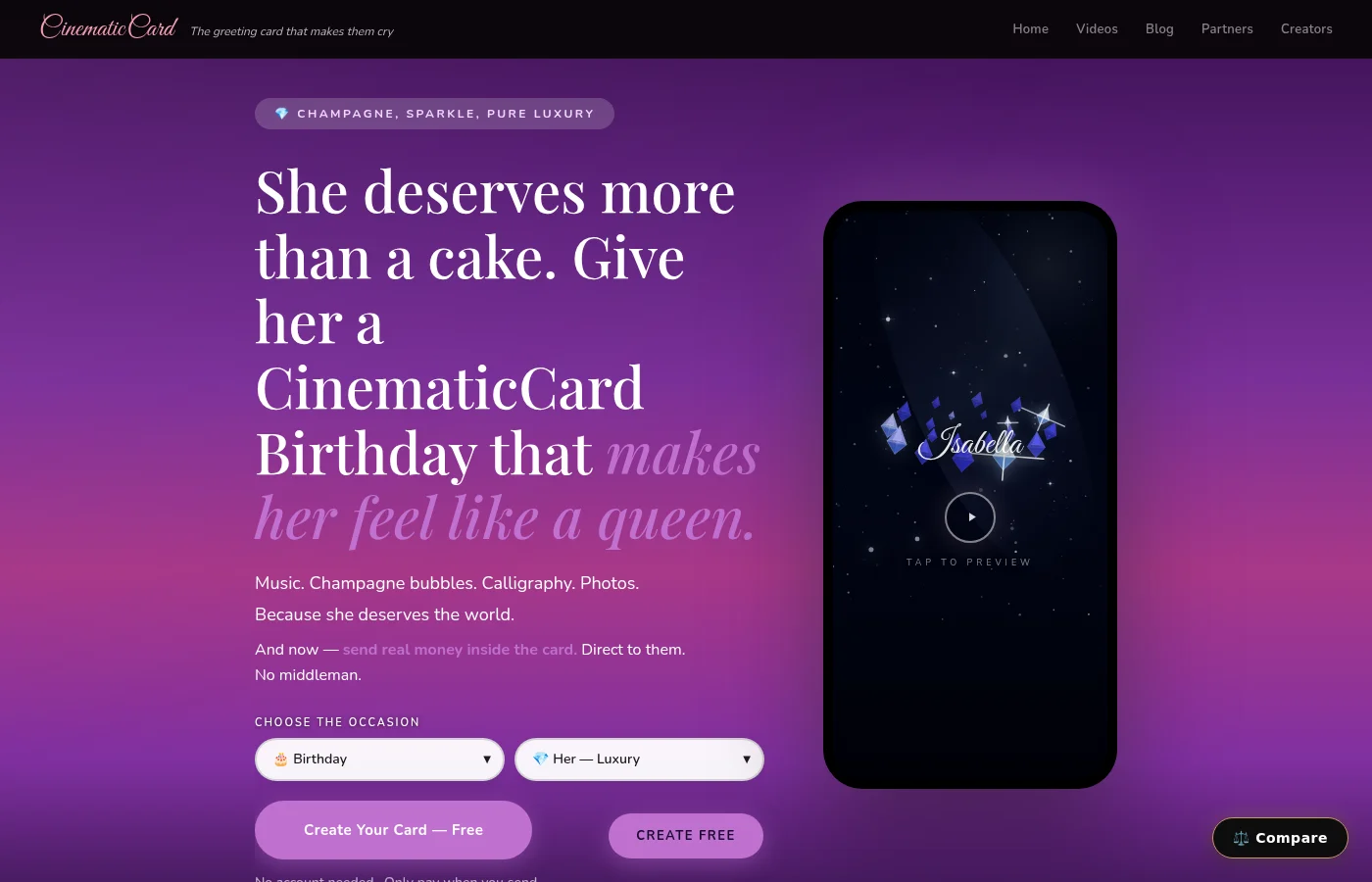
Picture what that apology could look like instead: something that could never be mistaken for a last-minute afterthought. With CinematicCard, you could build her an apology that starts the moment she opens it.
Her name writes out in elegant calligraphy as gentle piano music begins playing. Rose gold sparkles fall across the screen like the celebration she should have had. Then comes your voice -- not a text, but a message you recorded on your phone and uploaded, so she can hear how genuinely sorry you are: exactly how you messed up, why her birthday matters, and how you plan to be better.
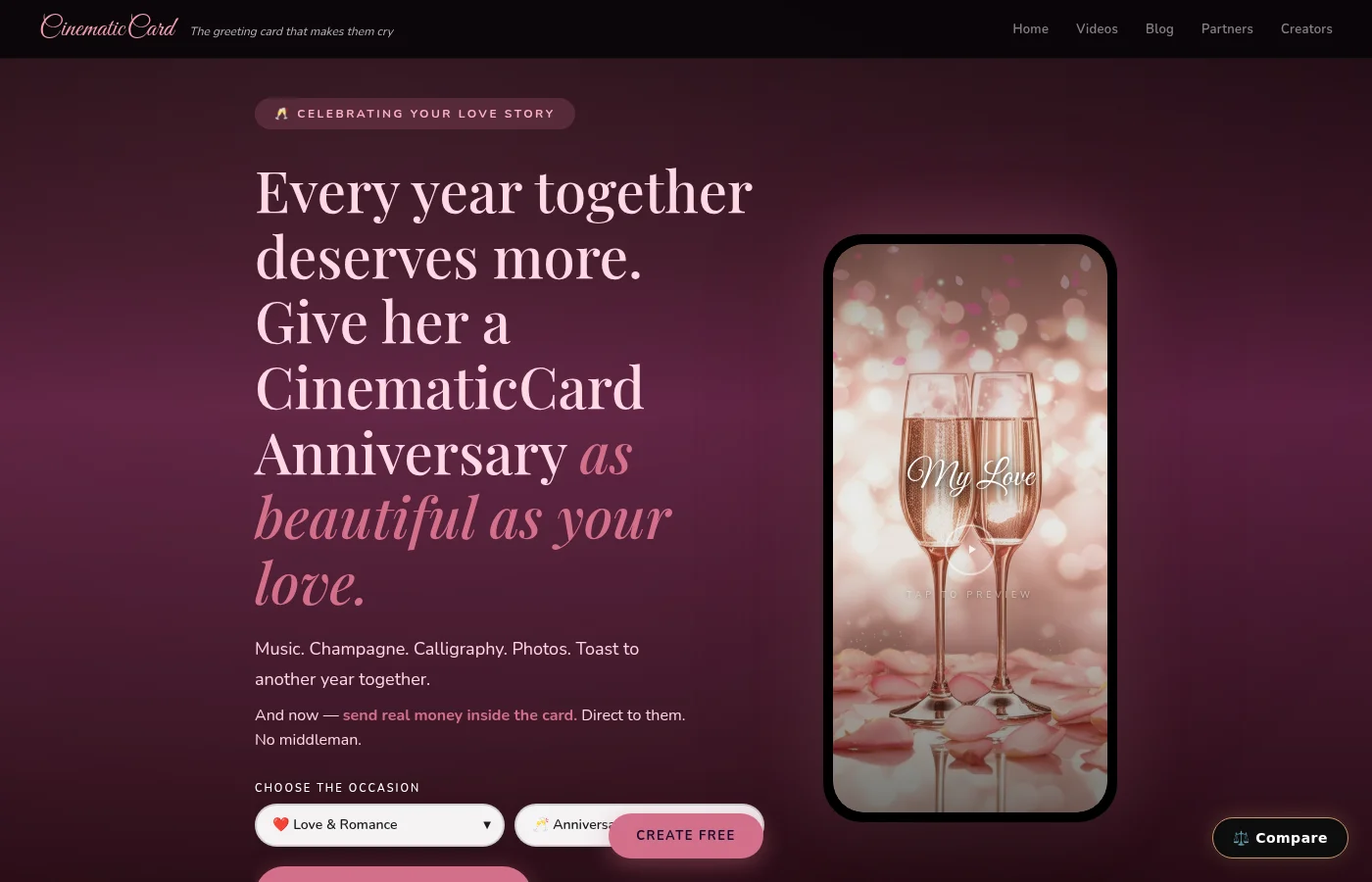
But here's what would make it an actual apology instead of just a fancy card: a photo slideshow of up to twenty pictures from your childhood, each one showing a moment where she was there for you. Every photo is a reminder of how she never forgot about you -- and it makes your commitment to do better feel more real.
The card could end with fireworks and your last line: "You deserve the world." Then a glowing envelope reveals a cash gift -- sent directly through Venmo for the birthday dinner you should have planned weeks ago.
Making Amends Gift Ideas That Go Beyond Flowers
Sometimes sorry requires backup. The card opens the door, but you need to walk through it with action. Here are sorry gift ideas that show you're serious about making things right:
Time-based gifts: Concert tickets, spa day, weekend trip -- anything that says "I want to make new, better memories with you."
Memory gifts: A photo album, custom artwork, something that celebrates your relationship and shows you value what you almost lost.
Experience gifts: Cooking class together, wine tasting, escape room -- activities that rebuild connection through shared experience.
Service gifts: Taking over something they hate doing, organizing something they've been putting off, handling a responsibility that's been weighing on them.
The gift should match the magnitude of your mistake, but more importantly, it should be personal to them. Flowers are nice, but flowers plus a plan to address the underlying issue? That's an apology.
Is a Digital Apology Card Tacky?
It's a fair question. There's something about digital cards that feels less "real" than paper ones. But here's the thing: a digital card only feels tacky when it's low effort -- the greeting card equivalent of a Facebook poke.
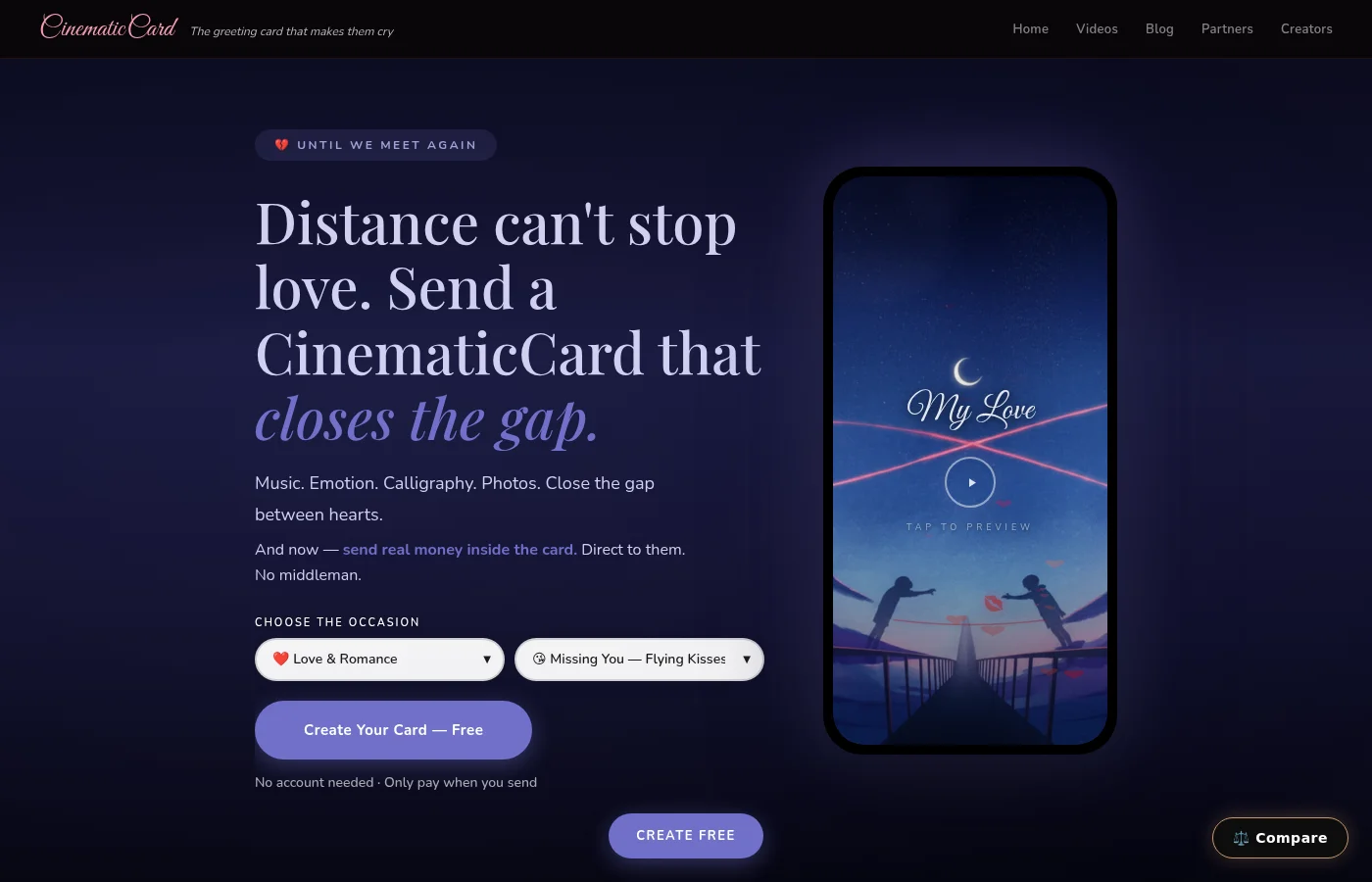
A CinematicCard is a greeting card made from your own memories. When someone opens it, they see their name being written in calligraphy, hear music or your actual voice, watch fireworks explode across their screen, and experience a slideshow of memories you chose specifically for them.

The difference between a tacky digital card and a meaningful one is the same as the difference between a text and a handwritten letter. It's not about the medium -- it's about the effort, personalization, and emotional impact.
Plus, a digital card has practical advantages. You can include your voice and up to twenty photos, and you can create and send it immediately when timing matters. When you've messed up, sometimes waiting three days for a card to arrive in the mail isn't an option.
Creating an Apology They'll Never Forget
Once you've chosen the memories, building the card itself takes less than a minute, but the thought behind it can help repair weeks or months of damage. Here's how the process works:
You start by choosing a theme that matches the person and the situation. For a romantic apology, there's a candlelit bedroom scene with silk sheets and rose petals. For a friend, maybe fireworks and celebration. For a parent, something warm and respectful.
Then comes the message. This is where you get specific about what you did wrong and how you'll do better. No generic "sorry for my mistake" language -- real, personal acknowledgment that proves you understand the impact.
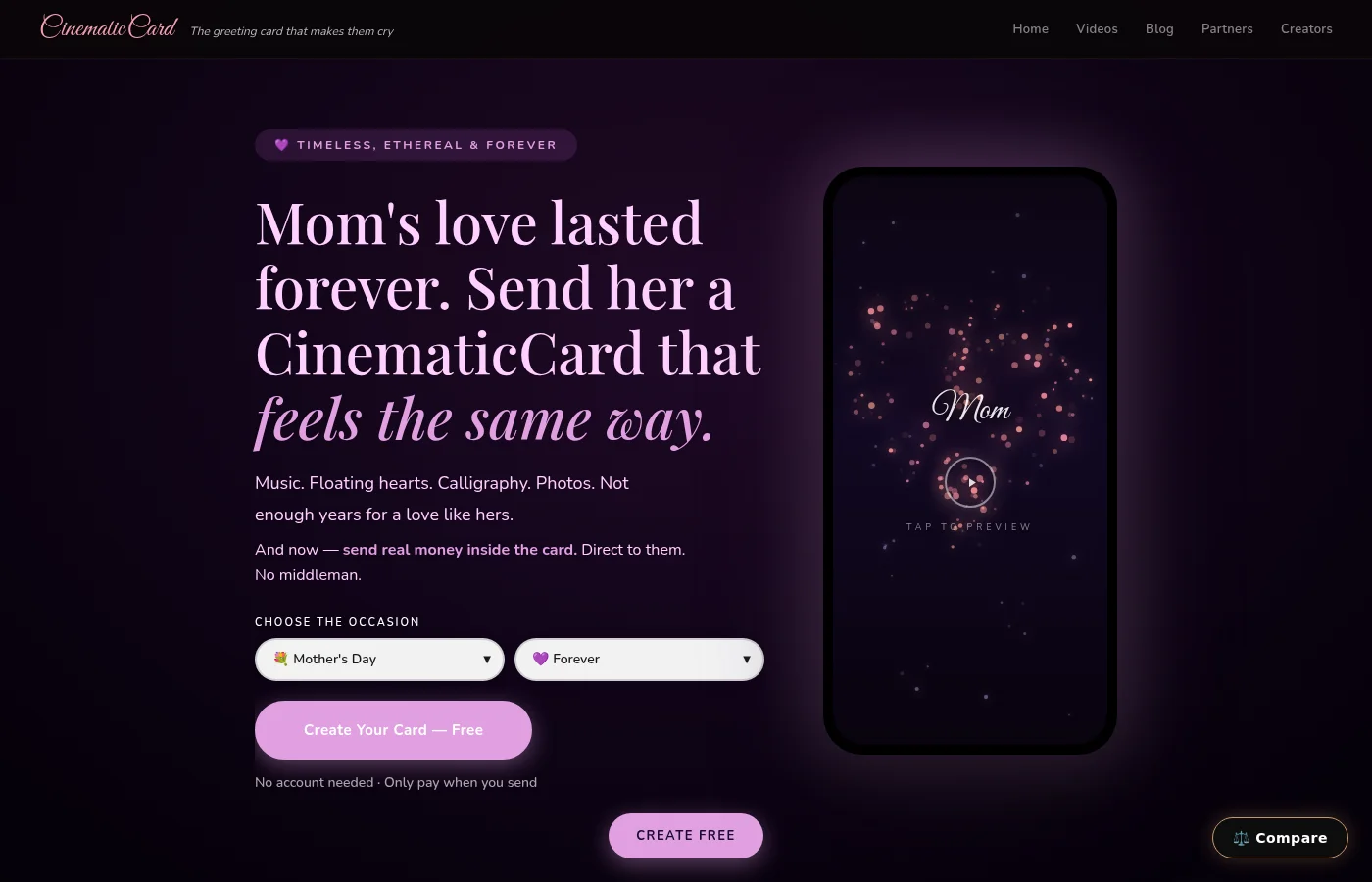
The magic happens in the preview. You see exactly what they'll experience: your message appearing in beautiful handwriting, animations playing across the screen, photos transitioning in a cinematic frame. You're not just writing a card -- you're directing a short film about someone you hurt and want to heal things with.
If you choose the Premium tier, you can upload your own voice recording. There's something powerful about hearing someone's actual voice say "I'm sorry" -- the hesitation, the emotion, the humanity that text can't capture. It's the difference between reading about regret and feeling it.
The Signature tier adds the ability to include a real cash gift through Venmo, PayPal, or CashApp. The money goes directly from you to them -- CinematicCard never touches it. But the delivery is cinematic: they see a glowing envelope with their dollar amount and tap once to claim it. It's like handing them cash, but with the presentation of a movie scene.
Why This Approach Actually Works
Here's the thing about apologies: people don't just want to hear that you're sorry. They want to feel that you understand the weight of what happened. A text apology is easy to ignore because it required no investment from you. But a card with your own recorded voice, twenty meaningful photos you chose, and a message only you could write? That's impossible to dismiss as thoughtless.
Picture a sister opening an apology card like that. She might watch it more than once -- not because she enjoys seeing you grovel, but because she can feel the effort in every element. The voice recording where you actually sound sorry. The photos that prove you've been thinking about your relationship, not just your guilt. The cash gift that turns your apology into immediate action.
It's the kind of card someone comes back to. That's not something you can say about a text that says "Sorry sis."
Making It Right, Starting Now
Real apologies aren't about perfect words -- they're about showing someone they matter enough for you to try harder than the minimum. Whether you forgot something important, said something hurtful, or just need to rebuild trust, the gesture needs to match the relationship's value.
Your first CinematicCard is free, and previewing is always free. Create one now, see exactly what they'll experience, and decide if it captures what you're trying to say. If it doesn't feel right, you haven't spent anything. If it does, you've got an apology that proves you understand the difference between "sorry" and "sorry enough to do something about it."
Sometimes the best way to say sorry is to stop talking and start showing. Create your apology card free at CinematicCard and turn your regret into something they'll never forget -- for all the right reasons.