So, you've got a side project. Maybe it's a clever tool you built to scratch your own itch, or perhaps it's a solution to a problem you see plaguing others. Now, you're dreaming of turning that side hustle into a full-fledged SaaS (Software as a Service) business. It's an exciting prospect, but the journey from side project to SaaS success requires careful planning, dedication, and a healthy dose of resilience. This guide will walk you through the process, offering practical steps, insightful tips, and answers to common questions to help you launch your own side project SaaS story.
What Exactly Is a Side Project SaaS?
Let's break down the core components. A side project, in this context, is a project you work on in your spare time, typically outside of your primary job or responsibilities. It's driven by passion, curiosity, or a desire to solve a specific problem.
SaaS, or Software as a Service, is a software delivery model where software is licensed on a subscription basis and is centrally hosted. Instead of buying and installing software on their own devices, users access it over the internet, usually through a web browser. Think of popular examples like Salesforce, Slack, or even creative tools like Adobe Creative Cloud.
A Side Project SaaS is the intersection of these two: a software product, originally developed as a side project, that is offered to users on a subscription basis. It's about taking a project born out of passion and turning it into a sustainable, scalable business.
Why Turning Your Side Project into SaaS Matters
Why bother transforming your side project into a SaaS business? There are several compelling reasons:
- Recurring Revenue: The subscription model of SaaS provides a predictable and recurring revenue stream. This predictability allows for better financial planning and reinvestment in the business.
- Scalability: SaaS solutions are inherently scalable. As your user base grows, you can easily scale your infrastructure to accommodate the increased demand.
- Passive Income Potential: While it's far from entirely passive, a successful SaaS business can generate income even when you're not actively working on it. This allows for greater financial freedom and flexibility.
- Intellectual Challenge and Growth: Building and scaling a SaaS business is a challenging and rewarding experience. It forces you to learn new skills, solve complex problems, and grow both personally and professionally.
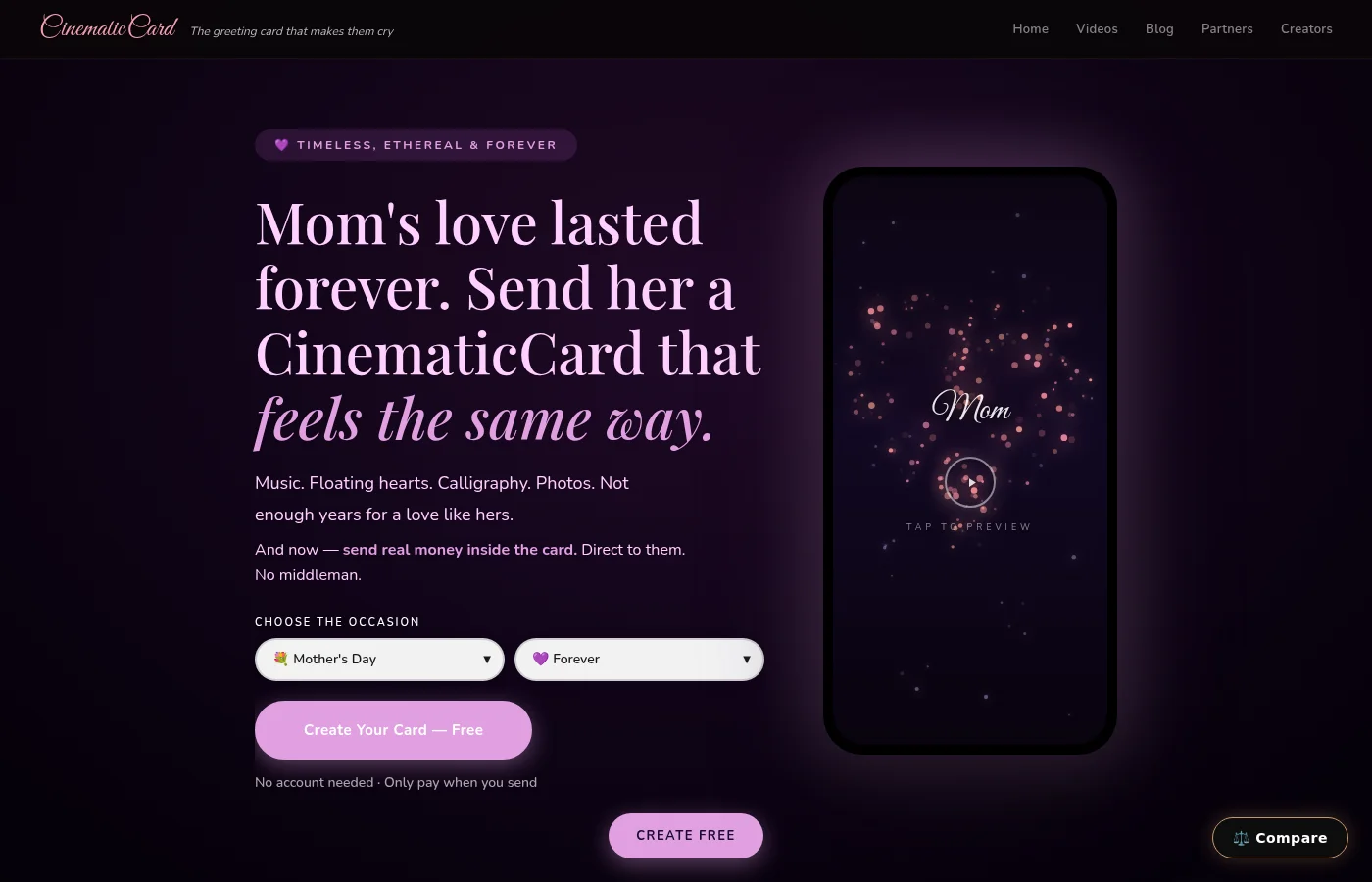
- Solving a Real Problem: Most importantly, a successful SaaS solves a real problem for its users. By providing a valuable solution, you can make a positive impact on the lives and businesses of others. Consider how a platform like CinematicCard enhances personal connections through greeting cards made from people's own memories.
From Idea to Income: Steps to Launching Your Side Project SaaS
Here's a comprehensive roadmap to guide you through the process of launching your side project SaaS:
1. Validate Your Idea (Again!)
Just because you find your side project useful doesn't guarantee others will pay for it. Rigorous validation is crucial.
- Talk to Potential Customers: Don't just ask if they like your idea. Ask if they would pay for it. Conduct user interviews, surveys, and focus groups to gather feedback and identify pain points.
- Analyze the Competition: What existing solutions are out there? What are their strengths and weaknesses? How can you differentiate your product and offer a better value proposition? Don't be afraid of competition; it validates the market. However, you need a unique selling proposition.
- Build an MVP (Minimum Viable Product): A core feature set is more important than a polished, full-featured product. Get something functional into the hands of users as quickly as possible. Focus on the features that address the core problem you're solving.
- Measure and Iterate: Track user behavior and gather feedback on your MVP. Use this data to iterate on your product and make improvements based on real-world usage. Analytics tools like Google Analytics or Mixpanel are invaluable here.
2. Define Your Target Audience
Who are you building this for? A clear understanding of your target audience is essential for effective marketing, product development, and customer support.
- Create Detailed User Personas: Develop fictional representations of your ideal customers, including their demographics, psychographics, needs, and pain points.
- Identify Their Needs and Motivations: What problems are they trying to solve? What are their goals and aspirations? How can your product help them achieve their objectives?
- Determine Their Preferred Communication Channels: Where do they spend their time online? What social media platforms do they use? What types of content do they consume?
- Refine Your Messaging: Tailor your marketing messages to resonate with your target audience. Use their language and address their specific needs and concerns.
3. Choose the Right Technology Stack
Selecting the right technology stack is critical for the scalability, maintainability, and performance of your SaaS application.

- Consider Your Skillset: Choose technologies that you are already familiar with, or that you are willing to learn quickly.
- Evaluate Scalability and Performance: Select technologies that can handle the expected growth of your user base and data volume.
- Assess Security and Reliability: Prioritize security and reliability to protect your users' data and ensure the uptime of your application.
- Think About Hosting: Cloud hosting providers like AWS, Google Cloud, and Azure offer a wide range of services and resources for hosting SaaS applications.
- Don't Over-Engineer: Start with a simple and straightforward stack. You can always add more complexity as your needs evolve.
4. Design Your User Interface (UI) and User Experience (UX)
A well-designed UI/UX is crucial for user adoption and satisfaction. Your product needs to be intuitive, easy to use, and visually appealing.
- Prioritize Simplicity and Usability: Focus on creating a clean and uncluttered interface that is easy for users to navigate.
- Conduct User Testing: Get feedback from potential users on your UI/UX design. Identify areas for improvement and iterate based on their feedback.
- Invest in Professional Design: If you don't have design expertise, consider hiring a professional UI/UX designer to help you create a polished and user-friendly product.
- Mobile Responsiveness: Ensure your SaaS application is accessible and usable on all devices, including desktops, tablets, and smartphones.
5. Set Up Your Infrastructure
Before you can launch your SaaS, you need to set up the necessary infrastructure to host and manage your application.
- Choose a Cloud Hosting Provider: Select a cloud hosting provider that meets your needs in terms of scalability, performance, security, and cost.
- Configure Your Servers and Databases: Set up your servers and databases to handle the expected traffic and data volume.
- Implement Security Measures: Implement security measures to protect your application and data from unauthorized access and cyber threats.
- Automate Deployment and Monitoring: Automate the deployment and monitoring of your application to ensure smooth operation and rapid response to issues.
6. Develop a Pricing Strategy
Your pricing strategy will significantly impact your revenue, user acquisition, and overall business success.
- Research Your Competition: Analyze the pricing models of your competitors and identify opportunities to differentiate your pricing.
- Consider Your Costs: Calculate your costs of development, hosting, support, and marketing to determine a profitable pricing range.
- Offer Multiple Pricing Tiers: Provide different pricing tiers to cater to different user needs and budgets.
- Experiment and Iterate: Test different pricing models and tiers to see what works best for your target audience. Consider freemium models, tiered pricing, and usage-based pricing.
7. Market and Promote Your SaaS
Getting the word out about your SaaS is essential for attracting users and generating revenue.
- Content Marketing: Create valuable and informative content that attracts and engages your target audience. Blog posts, articles, ebooks, and videos are all effective content marketing tools.
- Social Media Marketing: Use social media to connect with your target audience, share your content, and promote your SaaS.
- Search Engine Optimization (SEO): Optimize your website and content for search engines to improve your visibility and attract organic traffic.
- Paid Advertising: Consider using paid advertising platforms like Google Ads and social media ads to reach a wider audience.
- Email Marketing: Build an email list and use email marketing to nurture leads and promote your SaaS.
- Partnerships and Affiliates: Partner with other businesses and influencers to reach a wider audience and generate more leads.
- Indie Hacker Communities: Engage with online communities like Indie Hackers to get feedback, build relationships, and promote your SaaS.
8. Provide Excellent Customer Support
Exceptional customer support is crucial for retaining users and building a loyal customer base.
- Offer Multiple Support Channels: Provide multiple support channels, such as email, chat, and phone, to cater to different user preferences.
- Respond Quickly and Efficiently: Respond to support requests promptly and efficiently.
- Be Proactive: Anticipate user needs and provide proactive support.
- Gather Feedback: Collect feedback from users on their support experience and use it to improve your support processes.
- Build a Knowledge Base: Create a comprehensive knowledge base with articles and tutorials to help users solve common problems.
9. Iterate and Improve
The launch is just the beginning. Continuously iterate on your product, marketing, and support based on user feedback and data analysis.
- Track Key Metrics: Monitor key metrics such as user acquisition, retention, engagement, and revenue.
- Gather User Feedback: Continuously gather feedback from users through surveys, interviews, and feedback forms.
- Analyze Data: Analyze the data you collect to identify areas for improvement.
- Prioritize Improvements: Prioritize improvements based on their potential impact on user satisfaction and business growth.
- Implement Changes: Implement changes quickly and efficiently.
- Repeat the Process: Continuously iterate and improve your SaaS based on user feedback and data analysis.
10. Legal and Financial Considerations
Don't neglect the legal and financial aspects of your SaaS business.
- Choose a Legal Structure: Select a legal structure for your business, such as a sole proprietorship, LLC, or corporation.
- Draft Terms of Service and Privacy Policy: Create comprehensive terms of service and privacy policy agreements to protect your business and users.
- Comply with Data Privacy Regulations: Ensure compliance with data privacy regulations such as GDPR and CCPA.
- Manage Your Finances: Track your income and expenses, and manage your cash flow effectively.
- Consider Funding Options: Explore funding options such as bootstrapping, angel investors, and venture capital.
Tips for Side Project SaaS Success
Here are some additional tips to help you succeed in your side project SaaS journey:
- Start Small: Don't try to build a complex and feature-rich product from the outset. Focus on building a simple MVP that solves a specific problem.
- Stay Focused: Avoid scope creep and stay focused on your core value proposition.
- Automate Everything: Automate as many tasks as possible to free up your time and resources.
- Build a Community: Build a community around your SaaS to foster engagement and loyalty.
- Don't Be Afraid to Ask for Help: Seek advice and guidance from other entrepreneurs and experts.
- Be Patient and Persistent: Building a successful SaaS business takes time and effort. Don't get discouraged by setbacks and keep pushing forward.
- Learn from Your Mistakes: Embrace failure as a learning opportunity and use it to improve your product and business.
- Celebrate Your Successes: Acknowledge and celebrate your milestones and achievements along the way.
- Find a Co-founder: Consider partnering with someone who complements your skills and shares your vision.
- Use Tools Wisely: Leverage tools for project management, customer relationship management (CRM), and marketing automation to streamline your operations.
- Stay Inspired: Remember why you started this project in the first place. Keep your passion alive!
Common Mistakes to Avoid
Here are some common pitfalls to watch out for:
- Lack of Validation: Launching a product without validating the market demand.
- Over-Engineering: Building a product with too many features that no one uses.
- Poor User Experience: Creating a product that is difficult to use and navigate.
- Inadequate Marketing: Failing to effectively market your product and reach your target audience.
- Neglecting Customer Support: Providing poor customer support and failing to address user needs.
- Ignoring Feedback: Failing to listen to user feedback and iterate on your product.
- Running Out of Money: Not managing your finances effectively and running out of funding.
- Giving Up Too Soon: Getting discouraged by setbacks and giving up before you have a chance to succeed.
FAQ: Side Project SaaS Edition
Q: How much time should I dedicate to my side project SaaS?
A: This depends on your circumstances, but aim for at least 10-20 hours per week. Consistency is key.

Q: How do I handle customer support while working a full-time job?
A: Automate as much as possible with FAQs, chatbots, and self-service resources. Consider hiring a part-time virtual assistant or outsourcing customer support.
Q: When should I quit my full-time job to focus on my SaaS?
A: Only quit when your SaaS is generating enough revenue to cover your living expenses and you have a clear plan for growth. This is a significant decision that requires careful consideration.
Q: How do I protect my intellectual property?
A: Consult with a lawyer to determine the best way to protect your intellectual property, such as patents, trademarks, and copyrights.
Q: What are some essential tools for managing a SaaS business?
A: Consider tools for project management (e.g., Asana, Trello), CRM (e.g., HubSpot, Salesforce), email marketing (e.g., Mailchimp, ConvertKit), and analytics (e.g., Google Analytics, Mixpanel).
Q: How can I get feedback on my SaaS idea?
A: Share your idea with potential customers, join online communities, and participate in startup events.
Conclusion: Your SaaS Journey Begins Now
Turning your side project into a successful SaaS business is a challenging but rewarding endeavor. By following the steps outlined in this guide, you can increase your chances of success and build a thriving business that solves a real problem for your users. Remember to validate your idea, focus on your target audience, build a great product, market it effectively, and provide excellent customer support. And don't forget to iterate and improve based on user feedback and data analysis. Good luck, and may your side project SaaS story be one of success! Consider how you might incorporate personalization into your SaaS, drawing inspiration from the innovation at CinematicCard. Perhaps a SaaS platform that lets businesses send personalized thank you notes or onboarding messages. The possibilities are endless! You might even explore becoming a Creator Program member to find new inspiration and collaborations.