Why Your Greeting Card Should Have Your Voice, Not Celine Dion
Every digital greeting card sounds the same. Piano track #3. Generic orchestral music. Maybe some royalty-free jazz if you're lucky. But here's the thing: your mom doesn't want to hear Celine Dion on her birthday card. She wants to hear YOU.
After watching thousands of card reactions, we've learned something powerful: the cards that make people cry happy tears aren't the ones with perfect background music. They're the ones with imperfect, heartfelt voices saying exactly what needs to be said.
This is your complete guide to choosing between voice recordings and music for greeting cards that create unforgettable moments. Plus, we'll show you exactly how to record voice messages that hit different than any song ever could.
Why Voice Recordings Beat Background Music Every Time
Think about the last voicemail that made you smile. Was it because of production quality? Perfect audio levels? Of course not. It was because someone you care about took time to speak directly to you, in their actual voice, with their real emotions.
Voice recordings in greeting cards work the same way, but amplified. When someone opens a card expecting generic music and instead hears your voice saying their name, explaining why they matter, or sharing a specific memory—that's when the magic happens.
Here's what voice recordings accomplish that music never can:
**Instant Recognition**: They know it's you within two words. No generic piano track can replicate the warmth of hearing 'Happy birthday, Mom' in your actual voice.
**Emotional Authenticity**: Your voice cracks when you say something meaningful. Background music doesn't. That crack is where the emotion lives.
**Personal Details**: You can reference inside jokes, shared memories, or specific moments that only matter to you two. Music is universal—your voice is intimate.
**Unexpected Impact**: Everyone expects greeting cards to play music. Nobody expects to hear your voice telling them exactly why they're important to you.
Your First Card Is Completely Free
Record your voice, add photos, and send a cinematic card that makes them cry happy tears. Lock it in, enter your email, and it sends—no credit card required.
Create Your Voice CardWhen Music Actually Works (And When It Doesn't)
Music isn't always wrong for greeting cards. But it's wrong more often than most people think. Here's when each choice makes sense:
**Use Music When**: You're sending to someone who would appreciate a specific song that has meaning to your relationship. Maybe it's 'your song' with your partner, or your dad's favorite classic rock track, or a lullaby you used to sing to your kids.
**Use Your Voice When**: You want to create a moment they'll never forget. When you have something specific to say. When you want them to feel like you're right there with them.
The problem with most greeting card music is that it's chosen by algorithms, not hearts. CinematicCard includes 14 beautiful instrumental tracks, but the real magic happens when you upload your own audio—whether that's your voice, a song that matters to you both, or even a recording of you singing their favorite song (badly, but with love).
Compare this to other platforms: Hallmark eCards offers the same 3 piano tracks everyone's heard a hundred times. American Greetings uses generic instrumental music that sounds like elevator background noise. JibJab focuses on comedy sound effects that are funny once but forgettable.
What ONLY CinematicCard offers: custom audio upload where you can record your voice, upload their favorite song, or even send a voice message over meaningful background music. It's not just personalized—it's personal.
How to Record Voice Messages That Hit Different
Recording your voice for a greeting card isn't the same as leaving a voicemail. You're creating a moment that will get watched multiple times, shared with family, and treasured for years. Here's how to make it count:
**Start With Their Name**: Don't jump into 'Happy Birthday.' Start with 'Sarah' or 'Dad' or whatever you actually call them. Hearing their name in your voice sets the emotional tone immediately.
**Get Specific**: Instead of 'You're amazing,' try 'Remember when you drove six hours just to bring me soup when I had the flu? That's who you are.' Specific memories hit harder than generic compliments.
**Don't Script It**: Write bullet points, not a speech. You want to sound like you're talking to them, not reading to them. A little stumbling is human. Perfect is forgettable.
**Record Multiple Takes**: Your third attempt usually sounds more natural than your first. You'll relax into your actual voice instead of your 'recording' voice.
**End With Action**: Close with something they can picture. 'I can't wait to hug you' or 'Save me a piece of cake' or 'Call me after you watch this' creates connection beyond the card.
Real Examples: Voice vs. Music Card Reactions
We've watched thousands of card reaction videos, and the pattern is clear: voice recordings create longer, more emotional responses than music-only cards.
**Music Card Reaction**: 'Oh, that's pretty! I love this song. Thank you, honey.' Duration: 30 seconds. Shared: rarely.
**Voice Card Reaction**: 'Wait, is that...oh my god, is that your voice? [crying] Play it again. PLAY IT AGAIN.' Duration: 4 minutes. Shared: immediately, with everyone.
The difference isn't subtle. Voice recordings don't just get better reactions—they get completely different reactions. Instead of appreciation, you get amazement. Instead of 'thank you,' you get 'how did you make this?'
One customer recorded a voice message for her grandmother's 90th birthday. Instead of background music, she sang—badly—the lullaby her grandmother used to sing to her. The grandmother watched it 12 times in the first hour and called everyone she knew to hear it.
Another customer recorded his dad's favorite baseball story (that everyone had heard a hundred times) and sent it back to his dad for Father's Day. His dad's reaction video went viral in their family group chat. Not because the story was new, but because hearing it in his son's voice, carefully recorded as a gift, made it precious instead of repetitive.
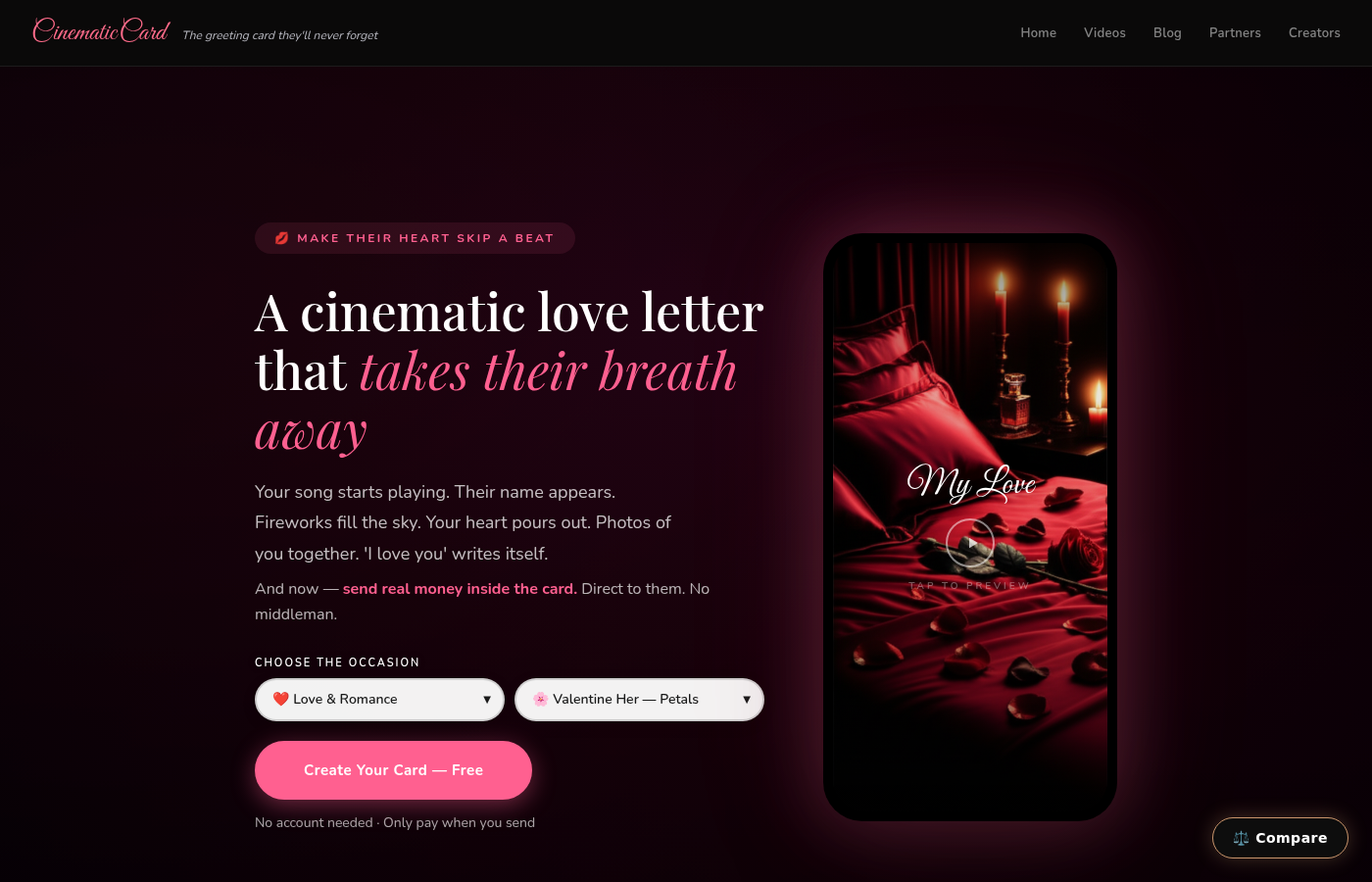
This is what separates CinematicCard from every other greeting card platform: we don't just let you upload custom audio—we build the entire cinematic experience around YOUR voice. The calligraphy animation, photo slideshow, and fireworks all sync with your recorded message to create something that feels like a mini-documentary about your relationship.
Create Your Voice Card in 3 Minutes
Pick a theme, upload photos, record your voice, and send a greeting card they'll treasure forever. Mother's Day is just 17 days away—perfect timing for a voice message that says everything.
Start RecordingTechnical Tips for Crystal-Clear Voice Recordings
You don't need professional equipment, but a few simple tips will make your voice recording sound amazing:
**Use Your Phone**: Your smartphone mic is better than most computer mics. Record directly in a voice memo app, then upload the file.
**Find a Quiet Spot**: Not silent—just without echo or background noise. A closet full of clothes actually works great as a mini recording studio.
**Hold It Close**: About 6 inches from your mouth. Too close and you'll sound muffled. Too far and you'll sound distant.
**Talk TO Them**: Picture their face while you're recording. You'll naturally use your 'talking to someone I love' voice instead of your 'leaving a business voicemail' voice.
**Keep It Under 90 Seconds**: Long enough to say something meaningful, short enough that they'll want to replay it. The sweet spot is 45-75 seconds.
**Don't Edit**: A natural pause or 'um' sounds more authentic than a perfectly edited speech. You're not recording a podcast—you're talking to someone you care about.
Frequently Asked Questions
Frequently Asked Questions
Can I use both voice and background music in the same card?
Yes! CinematicCard's Signature tier lets you layer your voice recording over soft background music. You get the emotional impact of your voice with the cinematic feel of music. The background music automatically adjusts to not compete with your voice.
What if I'm not comfortable with how my voice sounds?
Nobody likes hearing their own voice at first—that's completely normal. But recipients don't hear your voice the way you do. They hear love, effort, and someone who cared enough to record a personal message just for them. The 'imperfect' parts are what make it real.
How long should my voice message be?
45-90 seconds is the sweet spot. Long enough to say something meaningful and specific, short enough that they'll want to replay it immediately. If you have more to say, record multiple shorter messages and send separate cards.
Can I re-record my voice message if I don't like the first version?
Absolutely. You can record as many takes as you want before sending the card. Many customers find their third or fourth attempt sounds the most natural—you relax into just talking to the person instead of 'performing' for a recording.
Ready to make someone cry happy tears?
Create your card for free. Only pay when you send it.
Create Your Card Free