CinematicCard vs Moonpig: Personalized Photo Cards vs a Card Built From Your Memories
You know that moment when someone opens a card and their face changes — before they've even read a word? That reaction almost never comes from the design. It comes from recognition: a photo, a song or a line that brings a shared memory straight back.
That's a useful lens for comparing CinematicCard and Moonpig. Both let you personalize a card with your own photos. They just do very different things with them. Moonpig sells personalized printed cards and also sends eCards by email. CinematicCard is a digital greeting card that turns the memories on your phone into a cinematic slideshow with music and your message.
What Makes These Platforms Different?
On Moonpig's US site, you choose a card and click “Personalize” to add “your favorite images, text, stickers, and even an audio or a voice note.” You can have it printed and posted, or choose an eCard — you enter the recipient's email address instead of a postal address and they receive a virtual version of the card.
CinematicCard begins somewhere else. Traditional electronic greeting cards generally begin with a provider-created design. CinematicCard begins with the sender's own memories: you choose the photos that bring those memories back, add music and your message, and the card plays them as a cinematic experience.
The core difference? With Moonpig you personalize a card design. With CinematicCard, your memories are the card.
Photo Cards vs Cinematic Experiences
Moonpig is a strong fit when you want a physical keepsake with a great photo on the front — a card that sits on a mantel. Its eCards let you customize the design and add photos and a message, much as you would for a printed card.
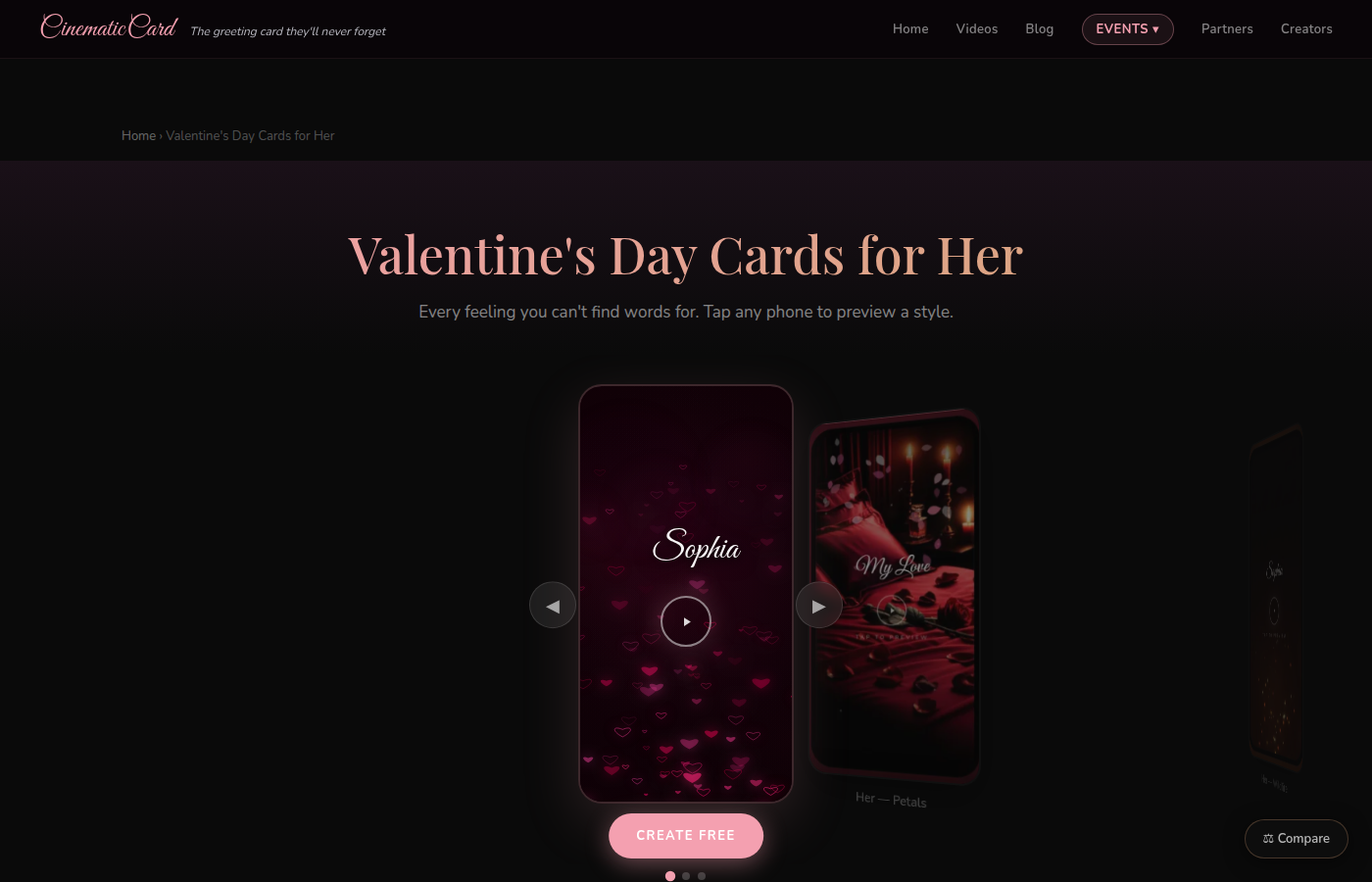
A CinematicCard is built for the screen. When they tap the link, music starts, their name writes itself in animated calligraphy, and then your photos play one after another — up to 20 of them — followed by your personal message.

Twenty photos changes what a card can say. One photo shows a moment. A sequence of photos — first apartment, the road trip, the hospital room when the baby arrived — tells the story of a relationship.
The Animation Factor: Why Movement Matters
A printed card is still; that's part of its charm. A digital card can unfold over time, which lets the order of your photos do the storytelling.
On CinematicCard, each theme sets the mood with effects matched to the occasion — fireworks and confetti for birthday cards, softer romantic effects for anniversaries — and the music carries the photos from one memory to the next. The effects frame the story. The photos you chose are the story.
Audio: Moonpig Voice Notes vs Your Own Song or Voice
Here's a real difference worth getting right. Moonpig lets you add an audio or voice note, and its Audio & Video Message Cards work by uploading a video or voice note; Moonpig prints the card with a QR code inside and posts it, and the recipient scans the code with their phone to play your message.
CinematicCard works differently: there's no recorder built into the app and no video upload, and the sound plays right inside the card. Choose a built-in soundtrack for your theme, or upload your own audio file (WAV, MP3 or MP4 — an MP4 is used for its audio only). That can be a song — the one from your wedding, the one you sang in the car, the one that was always playing in the kitchen — or a voice message you recorded on your phone. Music is a powerful memory cue: in a University of Iowa study published in Memory, memories evoked by music were more vivid than memories evoked by famous faces. The right song alongside the right photos can bring a whole chapter back. Here's how to add your own song.
Pricing: What You Actually Pay For
Moonpig pricing depends on the design and format. On the Moonpig US Create Your Own Photo Upload card we checked on September 16, 2026, the eCard was listed at $0.99, a Standard card at $9.99 and a Large card at $11.98. Other designs are priced differently, so check the card you want.
CinematicCard pricing is per card, with no subscription and no account:
- Your first card is free — the complete card, sent.
- Classic ($3.99): your message, their name in animated calligraphy, a cinematic theme and a built-in soundtrack.
- Premium ($6.99): up to 20 photos plus your own audio — a song or a voice message.
- Signature ($9.99): everything included, plus an optional cash gift sent via Venmo, PayPal or Cash App.
- Scheduled delivery: +$1.00.
Previewing is always free, so you can watch the whole card before you pay anything.
Is a Digital Greeting Card Actually Personal?
It's the question underneath every comparison like this one. The honest answer: a card is as personal as what you put into it.

A printed Moonpig card with the right photo and a handwritten-style message can be deeply personal. So can a digital card — when it's built from the memories you share with them. When someone opens an anniversary card and sees the photos you picked from years of camera rolls, the thought is obvious. The thought isn't in how long you took. It's in which memories you chose.
Which Platform Actually Delivers Emotion?
That depends on the person and the moment.
If the person you're celebrating loves something to hold, keep and display — or you want a voice message they can scan and play — Moonpig's printed cards are made for that.
If you want them to relive a string of memories set to music, from a link they can open anywhere and watch again, CinematicCard is built for that. Before you start, open your phone and find the photos that bring those memories back — that's most of the work.
The Verdict: Photo Cards vs Cards Built From Your Memories
CinematicCard vs Moonpig isn't really about which company is “better” — it's about what kind of card fits the moment. For a quick feature-by-feature view, see our side-by-side Moonpig comparison.
Choose Moonpig if:
- You want a printed card delivered by post
- Your photos on a printed card design is what you have in mind
- You'd like to include a voice note or video message via QR code
Choose CinematicCard if:
- You want the card to bring back a series of shared memories
- You'd like up to 20 photos played as a cinematic slideshow with music
- You want to use your own song, or a voice message you recorded on your phone
- You'd like to send it instantly as a link, with no app or account
Ready to see the difference? Make a card from your memories — your first CinematicCard is free, and you can preview the entire experience before you send. New to it? Here's how it works.
CinematicCard and Moonpig at a Glance
Moonpig details are taken from Moonpig’s US website, checked September 16, 2026. Prices vary by design and can change.
| Feature | CinematicCard | Moonpig |
|---|---|---|
| Format What gets sent |
A digital card opened from a link | Printed cards by post, or eCards by email |
| Where the card starts The core idea |
Your own memories: photos, music or voice, message | A Moonpig card design you personalize |
| Your photos How they are used |
Up to 20 photos in a cinematic slideshow | Added to the card design |
| Audio Sound on the card |
Built-in soundtrack, or your own audio (WAV, MP3 or MP4): a song or a voice message | Audio or voice note; video message cards use a printed QR code |
| Example price Before add-ons |
First card free, then from $3.99 | Create Your Own Photo Upload card: eCard $0.99, Standard $9.99 |
| Cash gift Money inside the card |
Optional on Signature (Venmo, PayPal, Cash App) | — |
Send Cash Inside Your Card
Include a real cash gift via Venmo, PayPal, or Cash App. Cinematic envelope reveal. One tap to claim.
How it works →Bulk Send: From $3.99/Card
Volume pricing: 25 @ $7.99, 100 @ $5.99, 500+ @ $3.99/card. Upload a CSV — each person gets their own personalized card.
See bulk pricing →Use Your Own Song or Voice
Pick a built-in soundtrack or upload your own audio (WAV, MP3 or MP4) — the song that brings the memory back, or a voice message you recorded on your phone.
How to add your song →Up to 20 Photos From Your Phone
Choose the photos that bring your memories back — up to 20 — and they play as a cinematic slideshow with music.
See it in action →Ready to make someone feel something real?
Your first card is free, and previewing is always free.
Create Your Card Free