5 Ways to Use Custom Audio in a Digital Greeting Card
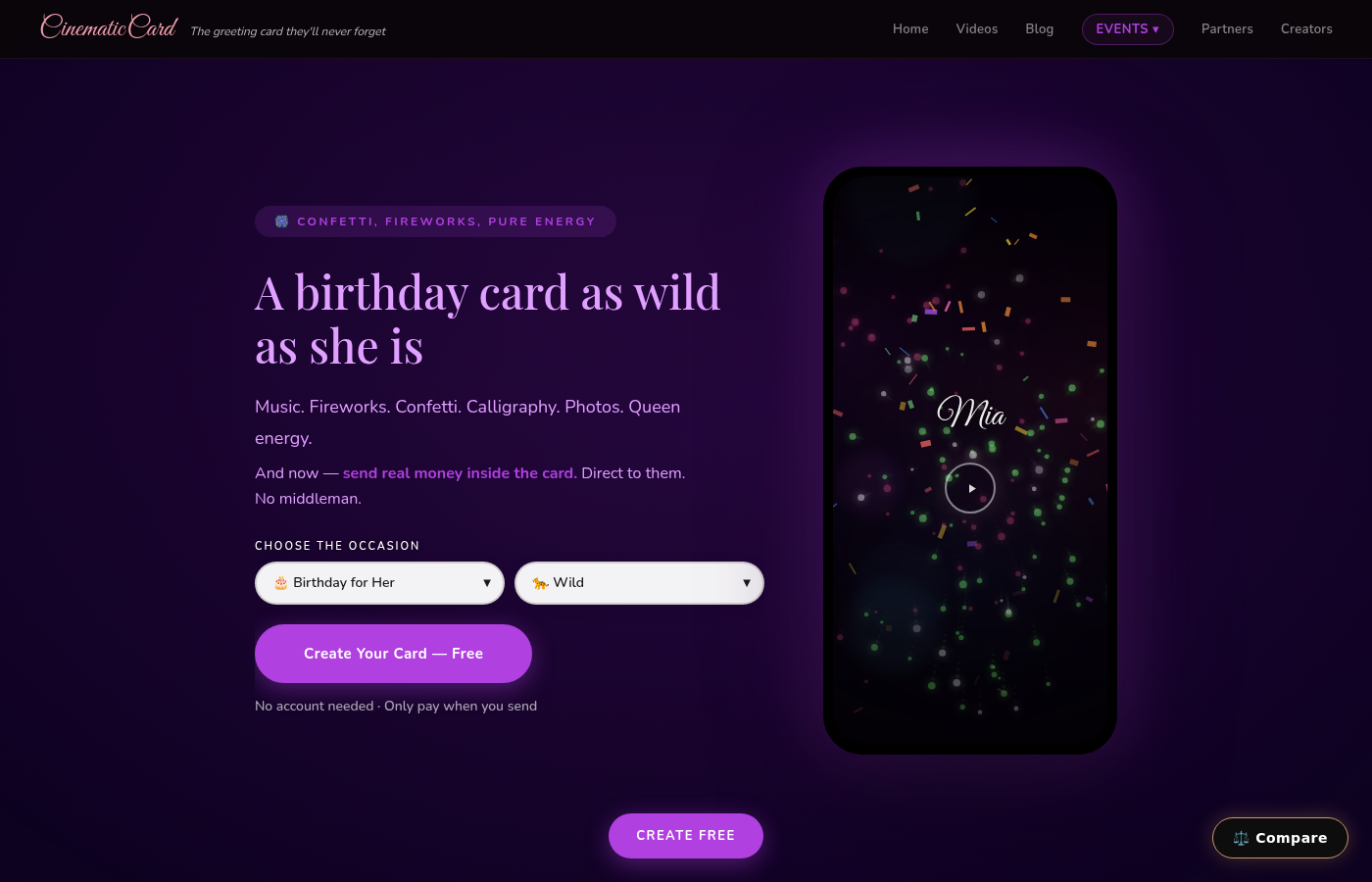
Your grandmother's 90th birthday deserves more than a generic "Happy Birthday" card with elevator music. But what if you could record yourself singing her favorite lullaby -- the one she used to hum to you -- and have it play while photos of you and her come back one by one and her name writes itself in golden calligraphy?
That's the idea behind custom audio greeting cards. Instead of settling for pre-selected songs that mean nothing to your relationship, the soundtrack is your own voice, or a song that already holds a memory for both of you.
What Makes a Custom Audio Greeting Card Special?
Most digital cards come with a stock soundtrack: a cheerful melody chosen by the card site that could play under anyone's birthday. It fills the silence, but it doesn't point back to anything you share.
A true custom audio greeting card lets you upload your own voice recording as the soundtrack. Picture this: your mom opens her birthday card, and instead of hearing some random piano melody, she hears YOUR voice saying "Mom, I know I don't call enough, but you mean everything to me" while the photos from those years play on her screen and her name writes itself in flowing calligraphy.
Or swap the stock track for a song you pick: the song she played every Saturday morning while you were growing up.
Songs are powerful memory cues. In one study, autobiographical memories evoked by popular music were more vivid than memories evoked by famous faces (Belfi, Karlan & Tranel, Memory, 2016). That's why the song choice matters so much: it brings the moment back, and the photos show them exactly which moment you mean.
The difference is everything. One is content. The other is connection.
1. Record a Personal Message That Plays During the Animation
The most powerful way to use custom audio is replacing background music entirely with your voice. Record it on your phone, then upload it as the card's audio. This works especially well for milestone moments -- graduations, anniversaries, or when someone's going through a tough time.
Instead of typing "Congratulations on your promotion" in a text box, record yourself saying it. Add the details that matter: "I remember when you were scared to apply for this job, and now look at you -- running the whole department."
When they open their graduation card and YOUR voice celebrates their achievement while the photos from those late-night study sessions play, they're not just getting a card. They're getting a moment worth keeping.
2. Sing Their Song (Even If You Can't Really Sing)
Here's something beautiful about custom audio -- it doesn't have to be perfect. Sometimes the most touching cards come from people who absolutely cannot carry a tune but try anyway.
Record yourself singing "Happy Birthday" in your kitchen. Sing the song that was playing during your first dance. Hum the lullaby your dad used to sing when you couldn't sleep. The wobbles and imperfections make it real.
Using their song says something a typed message can't: I know you. Pair it with the photos where they're mid-laugh or mid-dance, not the posed ones, and the card will feel like them.

Can You Mix Voice Recording With Background Music?
Yes, and this is where custom audio gets really creative. Record your personal message, then layer it over soft instrumental music using any basic audio app on your phone. On CinematicCard you can pick the built-in soundtrack chosen for your theme or upload your own audio as any MP3 or MP4 file.
Try recording your voice over:
- Acoustic guitar for intimate messages
- Piano for emotional moments
- Their favorite song playing quietly in the background
- Nature sounds if you're both outdoor lovers
- Even silence -- sometimes your voice alone is the most powerful choice
The key is keeping your voice as the star. The background music should support your words, not compete with them.
3. Include Inside Jokes and Shared Memories
Custom audio lets you reference things that only make sense to you and them. Record the voice impression that always makes them laugh. Quote the movie you've watched together fifty times. Reference the ridiculous argument you had about whether cereal is soup (it's not, by the way).
This works especially well for anniversary cards. While the photos from your terrible first date and the trip where everything went wrong play on screen, your voice can tell the story of that first date, or the moment you knew they were "the one," or how they still leave their socks on the bedroom floor and somehow you find it endearing.
These personal details turn a greeting card into something closer to a love letter, one that happens to come with a soundtrack.
4. Create a Family Collaboration
Here's something most people don't think of -- you can record multiple family members and edit them together into one audio file. Grandma opens her card to hear all five grandkids saying "Happy Birthday Grandma!" in sequence, followed by each one sharing their favorite memory with her.
This works beautifully for:
- Parents celebrating empty-nest milestones
- Grandparents who live far away
- Anyone going through medical treatment who needs to hear how loved they are
- Memorial cards celebrating someone's life
The technical part is simple -- record everyone separately, then use any free app to stitch the clips together into one MP3 or MP4 file. Collect everyone's favorite photos too and pick up to 20 that bring the best memories back. The emotional impact is enormous.
5. Record Them a Bedtime Story or Guided Memory
This might be the most creative use of custom audio in greeting cards. Instead of a traditional message, record something they can return to again and again.
For a stressed-out friend, record a five-minute guided meditation in your voice. For elderly grandparents, record yourself telling the story of how your grandparents met (as they told it to you). For a child's birthday, record yourself reading their favorite book.
These cards become keepsakes. Long after the birthday passes, they can still open that card to hear your voice reading "Goodnight Moon" or sharing family stories they don't want to forget.
How CinematicCard Makes Custom Audio Effortless
Most e-card sites give you their own soundtrack and leave it at that. On CinematicCard, the card is built from what you bring: your photos, your voice or your music, and your message.

Here's how it comes together:
- Find your memories. Add up to 20 photos from your phone (JPEG, PNG, HEIC or WebP).
- Choose the audio. Keep the soundtrack chosen for the theme, or upload any MP3 or MP4: your own song, or a voice message you recorded on your phone.
- Make it yours. Add their name, your message and your sign-off.
- Preview it. See the full card, with your photos as a cinematic slideshow, your audio and their name in animated calligraphy, before you pay anything. Previewing is always free.
- Send it. Share the link by text or any messaging app, or have it emailed to them now or on a scheduled date. It opens in any browser, with no app or account.
If you want a step-by-step walkthrough, the CinematicCard tutorial shows the whole process, and our guide on uploading custom music to a digital card covers the music step in detail.
Making It Feel Natural, Not Performative
The best custom audio greeting cards don't sound like performance pieces. They sound like conversations. Here's how to make yours feel natural:
Start with the memory, not the playlist. Decide which moment you want to bring back first, then find the words, song and photos that belong to it.
Record in a quiet space, but don't stress about perfect acoustics. Your kitchen at midnight often sounds better than your echoey bathroom, but don't rent a recording studio.
Talk TO them, not AT them. Imagine they're sitting across from you. Use their name. Pause where you naturally would in conversation.
Keep it conversational length. A 2-minute heartfelt message usually works better than a 10-minute speech, unless the occasion truly calls for something longer.
It's okay to restart. Record as many takes as you need. But also know that small imperfections -- a little laugh, a pause where you got emotional -- often make the message more touching, not less.
The goal isn't to sound like a professional voice actor. It's to sound like you.
Why This Matters More Than Perfect Production
In a world of AI-generated everything, your actual voice has become rare and precious. When someone receives a custom audio greeting card, they're not just hearing your words -- they're hearing proof that you took time, thought about them specifically, and cared enough to create something that can't be mass-produced.
That shaky recording of you singing off-key? Irreplaceable. That message where you got choked up halfway through? Priceless. That inside joke that makes no sense to anyone else? Perfect.
These imperfect, human moments are exactly what turn a greeting card into a memory worth keeping.
Ready to Create Your Custom Audio Greeting Card?
Record your message on your phone or pick the song that goes with the memory, then open your phone's photos and find the ones that bring it back. Your first CinematicCard is free: the complete card, sent, with no credit card needed. Previewing is always free, and after your first card, cards start at $3.99 with no subscription.
For more ideas on pairing songs and pictures, see how to make an ecard with photos and music.
Your voice, their emotions, and a little movie magic in between. Sometimes the best gifts are the ones that sound exactly like love.
Send Cash Inside Your Card
Include a real cash gift via Venmo, PayPal, or CashApp. Cinematic envelope reveal. One tap to claim.
How it works →Bulk Send: From $3.99/Card
Volume pricing: 25 @ $7.99, 100 @ $5.99, 500+ @ $3.99/card. Upload a CSV — each person gets their own personalized card.
See bulk pricing →Upload Your Own Audio
Upload a WAV, MP3 or MP4 — a song that means something, or a voice message you recorded on your phone.
Learn more →Up to 20 Photos From Your Phone
Choose the photos that bring your memories back, and CinematicCard plays them as a cinematic slideshow with music.
See it in action →Ready to make someone feel something real?
Your first card is free. Previewing is always free.
Create Your Card Free