Most of us have thousands of photos on our phones and almost no idea what's in them. When it's time to put together a card, a slideshow or a gift for someone, the problem isn't a shortage of pictures. It's choosing. Scroll long enough and everything starts to look the same.
The fix is to stop looking for good photos and start looking for a story. A handful of well-chosen images, in the right order, can say more about a relationship than hundreds of beautiful shots. This guide walks through how to do that, whether you're making a birthday card, an anniversary gift, a memorial tribute or a simple "I found these and thought of you."
Start with the story, not the camera roll
Before you open your photo library, finish this sentence: "These photos are about…"
- "…twenty years of being best friends."
- "…the year Mom became a grandmother."
- "…everything we've built since the tiny first apartment."
- "…Dad, and all the ways he showed up for us."
One sentence gives you a filter. Instead of asking "is this a nice photo?" for every picture, you ask "does this belong in that story?" It's a much faster question, and it keeps you from ending up with a random highlight reel.
The best photos aren't always the best pictures
The photo that means the most is often blurry, badly lit or taken by accident: the kitchen table on a Sunday morning, a car ride with everyone singing, a toddler asleep in a laundry basket. These are the pictures people linger over, because they bring back the texture of ordinary life that the posed photos leave out.
There's research behind that instinct. In a set of studies from Harvard Business School, researchers found that people underestimate how much they will enjoy rediscovering past experiences, and that they are especially likely to underestimate the pleasure of rediscovering ordinary, mundane moments rather than extraordinary ones. The authors linked this to people's misplaced faith that they'll remember everyday events anyway.
In practice, that means: don't only pick the milestones. The graduation photo belongs, but so does the picture of you and them eating takeout on the floor before the furniture arrived. Those everyday images are often the ones that make someone say, "I'd forgotten all about that."
Why photos work so well as memory cues
A photo is a shortcut back to a moment. In a case study, a Lafayette College psychologist used several years of phone photos and social media posts as prompts for recalling personal events. The study replicated earlier research showing that images are more evocative of autobiographical remembering than text. A single picture can bring back where you were, who was there and how it felt, in a way a written description rarely does.
It also helps to know which memories tend to carry emotional weight. Research on nostalgia found that nostalgic memories typically feature a person with close others, such as friends, or at momentous events, such as weddings. A good selection usually includes both: the big occasions and the people who were there for them.
Give the story a shape: beginning, middle, now
Once you've gathered candidates, arrange them like a short film rather than a random album. A simple three-part structure works for almost any relationship:
- The beginning. The earliest photo you can find of you together, or of the person at the start of this chapter. First apartment, first day of school, first trip together.
- The middle. The years in between: the milestones, the everyday moments, the funny ones, the hard season you got through.
- Now. A recent photo that shows who they are today, ideally ending on a photo of you together or the whole family.
Going roughly in chronological order is the easiest way for a viewer to feel time passing. That sense of "look how far we've come" is where a lot of the emotion comes from.
Practical ways to find the right photos on your phone
- Search by person. Most phone photo apps can group pictures by recognized faces. Start there, and you'll have years of one person in a single scroll.
- Search by place. Type the name of the lake house, the city where you met, or the hospital where the baby was born.
- Search by date. Jump to the same week in past years for birthdays and anniversaries.
- Favorite as you go. Heart anything that fits the story, then review only your favorites. It turns an overwhelming library into a short list.
- Digitize old prints. For older memories, simply take a clear, straight-on photo of the printed picture with your phone in good light.
- Ask for help. A quick message to a sibling or friend ("send me any photos you have of Grandpa") often turns up pictures you've never seen.
How to choose between similar photos
You'll end up with bursts of near-identical shots. Pick one and move on. When deciding, favor:
- Faces over scenery. A clear view of someone's expression beats a perfect sunset.
- Real expressions over posed smiles. The mid-laugh photo usually wins.
- Variety. Mix close-ups with wider shots, and group photos with one-on-one moments, so the sequence doesn't feel repetitive.
- Recognizability. Would the recipient immediately know when and where this was? If a photo needs a long explanation, it may not be pulling its weight.
And be honest about embarrassing photos. A little teasing is part of many friendships, but a card or tribute isn't the place for a picture the person would genuinely hate being seen.
Sequencing tips that make a big difference
- Open with instant recognition. The first image should make the recipient smile within a second.
- Put the most emotional photo near the end, not at the beginning. Let the story build to it.
- Avoid long runs from one event. Three photos from the same wedding are plenty; spread the rest of the story around them.
- End on connection. The final image is the one people remember. A photo of you with the people in the story, or everyone together, is almost always the right choice.
Add music that belongs to the story
If your photos will be shown with music, choose a song with its own history. Music is a remarkably strong memory cue. In a study from the University of California, Davis, excerpts of popular songs evoked autobiographical memories in about 30% of presentations, most songs evoked emotions that were mainly positive and strongly felt, and nostalgia was the third most common emotion reported.
The song from your wedding, the album that played on every road trip, the song your mother sang while cooking: any of these will do more than a generic instrumental, because it adds a second doorway into the same memories.
Turning your selection into something they can relive
Once you've chosen and ordered your photos, the hard part is done. You can print them, put them in an album or build them into a card.
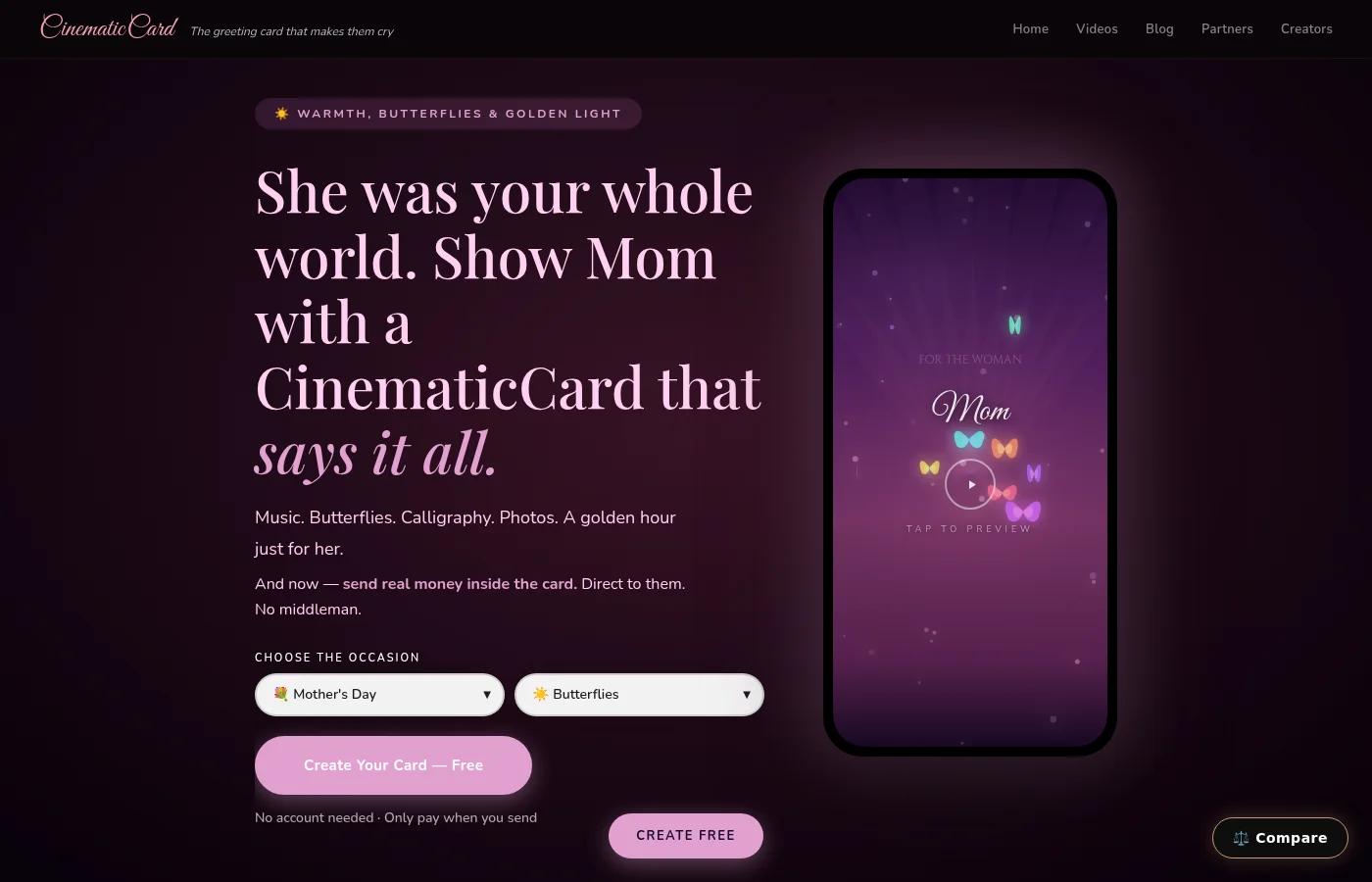
If you'd like them to play as a story, CinematicCard is built for that. You add up to 20 photos from your phone, choose a built-in soundtrack or upload your own song as an MP3, write your message and their name, and the photos become a cinematic slideshow you can preview for free before sending it by link or email. It works well for occasions where a set of photos carries the whole relationship, like Mother's Day cards and anniversary cards. Your first card is free, so you can make a card from your memories once your photos are picked, or read the step-by-step tutorial first.
For more on why this kind of card lands the way it does, see our guide to what makes a greeting card meaningful. And if the occasion is a birthday, here's how to make a birthday card more personal.
A quick photo-selection checklist
- Can you describe the story in one sentence?
- Does the selection include ordinary moments, not only milestones?
- Is there a beginning, a middle and a "now"?
- Have you removed near-duplicates?
- Does it end on a photo of connection?
Frequently asked questions
How do I choose photos for a card or photo gift?
Start by deciding what the photos are about in one sentence, then pick only the pictures that belong in that story. Include ordinary everyday moments as well as milestones, remove near-duplicates, and arrange them with a beginning, a middle and a recent photo at the end.
Should I use only good-quality photos?
No. The photos that mean the most are often imperfect: candid, blurry or taken on an ordinary day. Research on rediscovery suggests people underestimate how much they will enjoy revisiting mundane moments, so those everyday pictures are worth including.
What order should photos go in?
Roughly chronological order works best for most stories. Open with a photo the recipient will recognize instantly, build through the years in between, place the most emotional image near the end, and finish on a photo that shows your connection today.