Beyond the Classic E-Card (And What Came Next)
Remember the first e-card you ever sent? You picked a design, typed a few words, and hit send. It was quick, and it let someone know you were thinking of them.
Since then, something new has arrived: greeting cards made from your own memories, which feel less like a picture and more like opening a jewelry box. The difference isn't just visual -- it's emotional.
Why E-Cards Kept Evolving
E-cards never stopped changing. Many sites added motion, sound and photos over the years, and a thoughtful message on any card can still mean a lot.
Most e-cards, though, still start in the same place: a design picked from the site's catalog, plus a few words of your own. The card is the site's artwork, made personal by your message.
Then smartphones changed something important: we started carrying our memories with us. Thousands of photos of the people we love, sitting right there in our pockets.
That opened the door to a different kind of card -- one that starts with those memories instead of a design.
The Animation Revolution
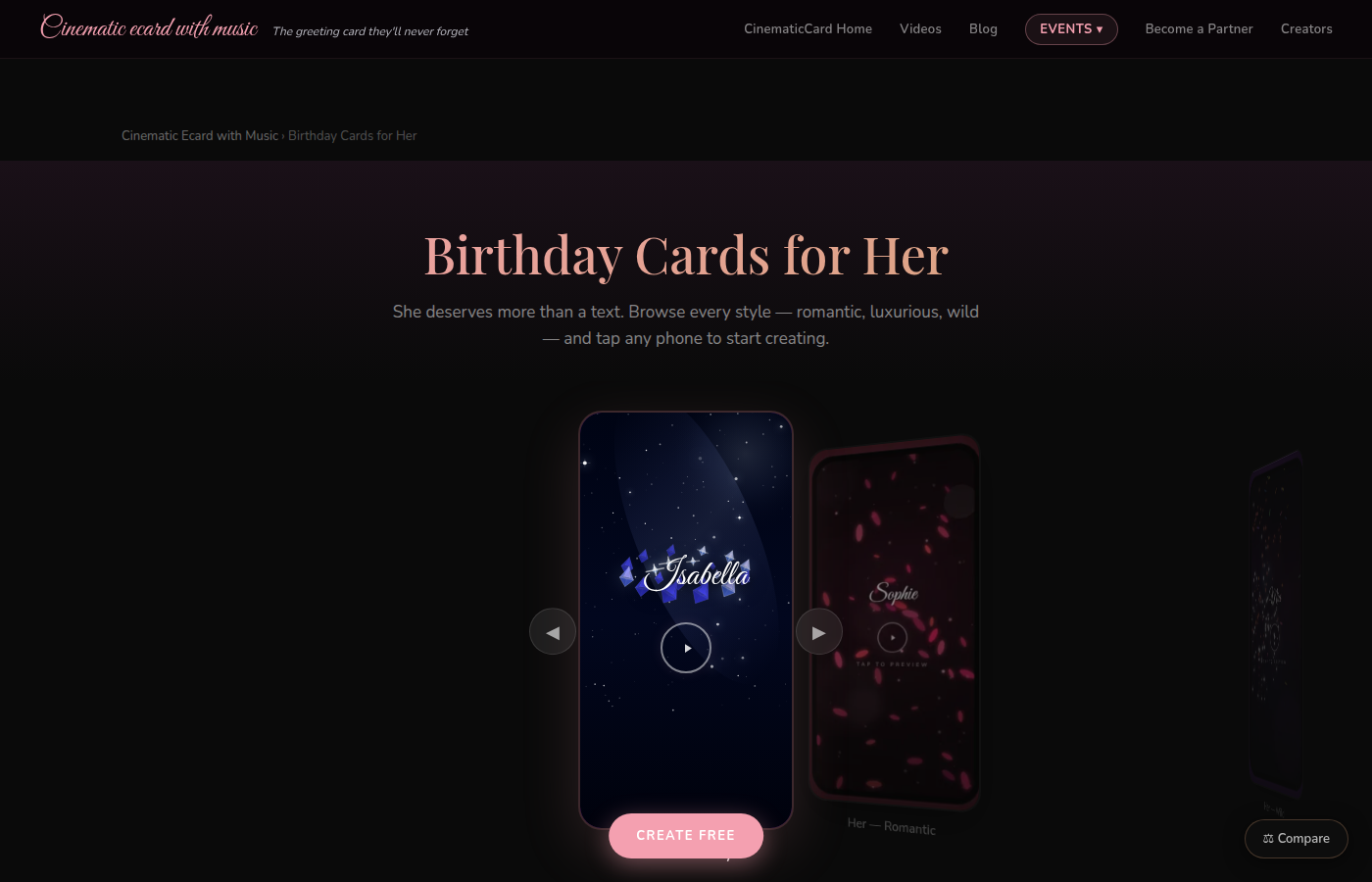
What came next wasn't just another e-card. It was a reimagining of what a digital greeting card could be. Instead of starting with a design, the card starts with your photos, your words and your music, played as a cinematic experience with real-time particle effects.
Take a valentine's day card -- but not the old kind. Picture silk sheets draped across a luxury bedroom, rose petals drifting through candlelight, and her name appearing in calligraphy while gentle piano music plays. The entire scene glows and breathes like a living painting. That's not a greeting card -- that's a moment.
What Makes Modern Digital Cards Different?
The new generation of animated greeting cards operates on a completely different principle. Instead of showing someone a picture with your message, they tell a story where the person opening it is the main character.
Here's how it actually works: someone opens their card and hears music -- a soundtrack that fits the theme, or a song or voice message you uploaded. Their name writes across the screen in beautiful calligraphy, stroke by stroke. Then the magic happens: fireworks burst across a moonlit scene, or snow falls in a cozy living room, or champagne bubbles rise from crystal glasses while rose petals drift through the air.
The animation isn't random -- it's specifically designed for the emotion you're trying to create. A Father's Day card shows a leather armchair in a study where cigar smoke rises visibly through the entire frame, wisps drifting past letters that spell "DAD." A kids' birthday card does a dramatic 3-2-1 countdown, flashes white, then explodes into rainbow "HAPPY BIRTHDAY" text while cartoon animals dance across the screen.
But here's the part that can be the most moving: you can upload your own voice recording as the card's audio. Imagine your mom opening her birthday card and hearing YOUR voice saying "Happy birthday, Mom" while her name appears in golden calligraphy and fireworks light up the screen.
The Photo Story Component
Photos are the most personal part of any card. Memory-first cards turn up to 20 of your photos into cinematic moments. Each image appears in an elegant frame while the animation continues around it, creating the feeling of watching a short film about your relationship.
Is a Digital Birthday Card Tacky?
It's a fair question, and the answer depends entirely on execution. A card sent in a rush with nothing personal in it? That can feel careless. But a cinematic experience where their name appears in calligraphy while fireworks burst across a moonlit sky and their favorite photos play in elegant frames? That's not tacky -- that's thoughtful.
The tackiness came from the low effort, not the digital format. When someone receives a card that clearly took 30 seconds to create and looks like everyone else's, they feel it. But when they open something that's been personalized with their photos, maybe even their loved one's voice, and animated specifically for the emotion being conveyed, the digital format becomes irrelevant.
Think about it: we watch movies on our phones, conduct business over video calls, and share our most important moments through digital photos. The idea that digital automatically means impersonal is outdated.

The Voice Upload Game-Changer
Here's what's really revolutionizing digital cards: voice personalization. Being able to upload a personal voice recording transforms a greeting card from something you look at to something you experience. When someone opens their card and hears their daughter's voice saying "I love you, Dad" while animated fireworks light up the screen, the fact that it's digital becomes completely irrelevant.
This feature exists because someone realized that the most meaningful part of any greeting isn't the visual -- it's the personal connection. Your voice, saying words meant specifically for them, combined with animations designed to amplify that emotion, creates something that feels deeply personal.
The Economics of Free Creation
It helps to see exactly what you're sending before you send it. Nobody wants to buy a wrapped present for someone without knowing what's inside.
CinematicCard makes previewing always free. You build your entire card, see exactly how it looks, preview every animation, and watch your photos play in the cinematic sequence. Your first CinematicCard is free to send, and after that cards start at $3.99, with no subscription. That removes the anxiety of sending and means every card that goes out is something you actually love.
What's Next for Digital Greeting Cards
The next chapter of digital greeting cards is more personal: cards that don't just deliver a message but play back the memories you share, worth watching multiple times.
The core insight is simple: people want to feel special, seen, and celebrated. That isn't about technology -- it's about emotion, and about the moments only you and they share.
A card you pick says "I thought of you." A card made from your memories says "and here's everything I remember about us."
Ready to see what came next? Build your own cinematic greeting card at CinematicCard.com -- previewing is always free, and your first card is free to send.
The Part You Have to Feel: The Creation Experience
Here's something a feature list can't show you: what it feels like to make the card. On CinematicCard, you go to the site, pick a theme, and the entire mood shifts — music plays, particles drift across the screen, and you're suddenly in the world they'll experience. Type your message, choose your photos, and hit preview. Once you've chosen your memories, it takes less than a minute. No account. No app download. No subscription. You see exactly what they'll see — the fireworks, the calligraphy writing their name, the music swelling. And when you finalize? A wax seal animation stamps your card shut. When you hit send, the envelope closes and launches off the screen like a letter from a movie. CinematicCard makes even the send button an experience. You can preview the entire thing free, and your first card is free to send.
Send Cash Inside Your Card
Include a real cash gift via Venmo, PayPal, or CashApp. Cinematic envelope reveal. One tap to claim.
How it works →Bulk Send: From $3.99/Card
Volume pricing: 25 @ $7.99, 100 @ $5.99, 500+ @ $3.99/card. Upload a CSV — each person gets their own personalized card.
See bulk pricing →Upload Your Own Audio
Upload a WAV, MP3 or MP4 — your voice, your song, a personal message recorded on your phone. They hear YOU.
Learn more →Up to 20 Photos From Your Phone
Choose up to 20 moments from your phone and we turn them into a cinematic slideshow.
See it in action →Ready to make someone feel something real?
Your first CinematicCard is free. Previewing is always free.
Create Your Card Free